
Machining Services vs Alternatives: Which Material–Process Pair Wins Your Part
Buyers comparing machining services with a casting, a forging, metal injection molding, an extrusion, or a metal 3D print usually start from unit price. For a part that rides in a vehicle, feeds a pump, holds a seal, or supports a load, that is the wrong first question. Every route on the list can produce the shape; they do not all leave the same record of how the shape was made. This guide sets up the comparison the way an audit does — by asking which material–process pair leaves a traceability chain you can defend when a part fails in service. It runs each route through five record dimensions, reads the routes backward from typical failure modes, and then shows how to let record requirements screen out process candidates before any quote is compared. Where machining services are genuinely the answer, the machining floor's own record chain is the reference the whole comparison sits on.
Why does traceability outrank price when machining services face a process alternative?
Machining's strongest argument against an alternative process is rarely its geometry. A five-axis mill and a turning center can make almost any feature a drawing asks for, but so, within their limits, can a foundry, a forge, or a printer. What cutting from solid does that the alternatives struggle to match is produce a record as a by-product of the process itself. Every CNC batch naturally generates material certificates at receiving, a stored program, a first-article inspection, dimensional reports, and lot-level process data, not because a customer asked for paperwork, but because the process is machine-controlled and the measurements already exist. For an automotive tier supplier, a medical device maker, or any buyer under audit, that record density is the property that matters first. Traceability is the first filter between process candidates; cost is the second.
Reversing the decision order changes the outcome. If you price first, the cheapest route wins the discussion and traceability becomes a problem to retrofit, and records demanded after the process choice are exactly the ones a foundry, MIM house, or printer struggles to produce, because the data was never captured in a part-linked form. If you screen for traceability first, most of the candidate routes drop out on their own, and the price comparison that follows runs inside a shortlist of processes that could actually survive an audit. That is the ordering the quality traceability chain explained on this site's home page is built on: the chain is not paperwork added to a good part. It decides which parts, and which processes, are even eligible to be called good.
Regulated buyers already behave this way. Automotive programs governed by IATF 16949 (product design excluded) expect PPAP-style evidence — process flow, control plan, PFMEA, capability data — tied to a lot. Medical device makers must hold batch records their own quality system can audit. Aerospace work flows through similar documentation requirements. None of those buyers asks "which process is cheapest?" as an open question; they ask "which process can make this part and document it to the standard my customer will check?" For those buyers the alternative process has to clear the record bar first, and price only negotiates inside whatever clears it.
Which traceability does each process route actually leave behind?
Read the conclusion before the detail, because it is stable across materials and part sizes. Run on its own, CNC machining is the only route that produces per-piece or per-lot records across all five dimensions below as a normal by-product. A casting or forging route can pass a PPAP-grade audit only when the foundry or forge runs a fully documented supply chain — melt or heat numbers, furnace-load records, and inspection reports that survive to part level — and many do. Metal 3D printing tracks its builds in excellent detail, but the powder chain behind those builds is an emerging difficulty rather than a settled one. Metal injection molding carries an inherent blind spot: parts from several molding batches mix inside a single sintering furnace load, so the identity of the molding batch is lost exactly where it matters. Extrusion traces its billet heats but loses per-length identity once profiles are cut and machined elsewhere. Each row below shows where the record is solid, where it is partial, and where it is a blind spot.
| Route | Material-batch traceability (heat/lot to certificate) | Process-parameter records (automatic, part-linked) | Piece-by-piece vs batch verification | Root-cause depth after a field failure | Post-process and heat-treatment records |
|---|---|---|---|---|---|
| CNC machining services | Yes — each incoming bar or billet lot is matched to its mill certificate at receiving, and that lot number stays with the batch through shipment. | Yes — program, tools, machine, operator and cycle are logged per lot by the MES/ERP system, not handwritten afterward. | Piece-by-piece when it matters — CMM and gauges can measure every part on a critical characteristic, with SPC against the lot. | To the program and the lot — a failed part maps to its program revision, material lot, and measured data. | Partial — in-house steps stay on the batch; outsourced heat treatment or plating breaks the chain unless its batch number returns to the same record. |
| Investment or precision casting | Yes — a melt or heat number ties the pour group to the ingot certificate; the cast grade and condition belong in the record. | Partial — shell-batch, pour temperature and operator data exist per pour group, but depth and format vary widely between foundries. | Batch — properties come from separately cast test coupons; internal soundness is sampled by radiography or sectioning, not measured on every part. | To the pour and the shell batch — a melt defect spans every piece poured from that heat; a one-off anomaly in a single casting is hard to isolate because testing is sampled. | Partial — heat treatment runs as furnace loads; if the load number is not linked back to the pour, the record stops at "heat-treated." |
| Forging | Yes — billet or bar heat numbers with mill certificates are standard, and parts are usually lot-tagged or stamped. | Partial — forging temperature, press stroke and die are logged per lot or shift; part-level parameter capture is less common than on a CNC floor. | Batch with sampled hardness — destructive and hardness testing is sampled per batch or per die, not applied to every forging. | To the die, the heat and the batch — grain-flow questions resolve from records plus metallography on retained samples; a single bad forging still resolves through batch sampling. | Partial — normalize, quench and temper are documented as furnace loads; the document must name the load or the link dies there. |
| Metal injection molding (MIM) | Partial — powder feedstock lots are certified, but after molding, debinding and sintering, parts from several molding lots share one furnace load. | Partial — molding and furnace cycle logs exist, but they attach to a furnace load that has already mixed the batches. | Batch — density and tensile testing sample the sintered load; individual parts are not measured to machined tolerances. | To the furnace load, not the molding batch — this is the inherent blind spot: the failed part's molding-batch identity is usually gone after sintering. | Blind spot at the core step — sintering is where batch mixing occurs, and any later heat treatment stacks a second furnace batch on top. |
| Metal 3D printing (powder-bed fusion) | Emerging — the powder lot is certified at receipt, but powder is sieved, reused and blended across builds, so what actually melted in a layer is not cleanly tied to one certificate. | Yes — each build logs layer-by-layer parameters — laser power, scan speed, strategy — in the build file with machine and operator. | Per-build — parts inside one build share the record; verification often relies on witness coupons from the same build. | To the build and the layer — a layer-driven defect maps to that layer's parameters; a powder-quality defect is the hard case because reuse blurs the lot. | Partial — support removal, stress relief and hot isostatic pressing are documented per build, and each step adds its own batch to keep attached to the part. |
| Extrusion or rolled profile | Yes to the billet heat — a profile run traces to its billet heat; the caveat is that a long run draws several billets, and finished lengths can mix them. | Partial — press speed, temperature and die are logged per run; a cut length inherits the run's record, not a per-piece one. | Batch — straightness, twist and section are checked per run or bundle, not per meter. | To the die and the billet heat — once profiles are cut and machined downstream, the link survives only if the next shop keeps the lot mark. | Partial — artificial aging runs as furnace batches; the batch record must be tied back to the profile lot to survive. |
Two readings of the table matter more than the rest. First, the blind spots cluster in the steps that mix or sample. Wherever many parts share one melt, one furnace load, one sinter batch, or one blended powder container, the record can still tell you the group, and it cannot tell you which part inside the group is the one that failed. Second, "Yes" and "Partial" are labels for the record a process is capable of leaving, not promises every supplier delivers. A machining shop that never logs its outsourced heat treatment has a hole in the same place a foundry does. The question every buyer should put to any process candidate is the one the quality pages on this site use as their test: which records ship with the parts, and can a stranger verify them?
Which route could adjudicate a fatigue failure, and which route could not?
The cleanest way to see what a process really leaves behind is to start from the failure, not from the brochure. Pick the way a part is most likely to die in service, then ask which route produces the records needed to adjudicate it. Each failure mode interrogates a different part of the chain.
Consider a shaft that fails in fatigue after about a year in service — figures illustrative, the structure is the lesson. The question on the table is scope: which other parts in the field share the risk? If the shaft was cut from certified bar on a CNC floor, the buyer can pull the material lot and its mill certificate, the program revision that ran the batch, the first-article report, the SPC data on the critical diameters, and the batch hardness record. The answer defines a boundary: only shafts from that heat, that program revision, and that lot window are suspect. If the same shaft was forged and finish-machined, the route answers differently. The forge can produce the billet heat and the forging records, but per-piece hardness was sampled, not measured on every forging, so the containment boundary widens to the whole batch or die set even though only a fraction of the parts may be defective. The forging route is not untraceable; it is traceable to a coarser grain, and on a fatigue question coarse is expensive.
Consider a housing whose machined face opens a porosity defect in a cast wall — a classic failure that appears only after an alternative process has already been chosen. The foundry's heat report is clean and dates the melt, but internal soundness was sampled by radiography, and the defect sits in a wall that was never radiographed on the failed part's siblings. The buyer can say which heat and which shell batch the part came from, and cannot say which other castings in that batch share the porosity, because no record exists at the piece level for an internal condition that only shows itself when a cutter breaks the surface. The route produced a group answer to a part-level question. Machining from solid never meets this failure mode at all, because there is no cast wall to hide a void; the material story stays on one bar lot and the defect cannot be born inside the material without the mill certificate catching it at receiving.
The pattern repeats across every alternative. A route whose verification is batch-sampled produces batch-sized answers to failure questions, and a buyer whose failure is one part in ten thousand pays for all ten thousand. The record depth a route can reach — piece, lot, furnace load, or melt — sets the granularity at which you can contain a problem, and that granularity is decided at process selection, not at the recall meeting.
What do drift, wrong material, and a mixed batch each demand of the record?
Fatigue is one failure family. Run the same reverse test on three more, and each one names the record it needs before a route can be trusted.
Dimensional drift in a high-volume run. A feature slowly walks out of tolerance and parts near the end of the run are out of spec. On a CNC route the SPC data shows the drift starting at a specific part number, and the tool or machine event behind it can be identified and the exact window of affected parts contained — this is what per-piece measurement buys. On a die-cast route the cavity wears gradually and is checked by sampling, so containment runs from the last good cavity check forward, and the buyer absorbs every part made since that check whether or not it drifted. The dimension that drifts on a molded, cast, or formed route is usually produced by a tool that degrades by use; the record only catches the drift at the sampling interval.
Wrong material or an out-of-spec heat. The part tests fine dimensionally and fails the material requirement — strength, corrosion, or chemistry. Every route that starts from certified feedstock can answer this one, because the heat number leads back to the certificate and the XRF check at receiving. The routes that struggle are the ones that blend feedstock after receipt: MIM powder or reused 3D-printing powder that has been sieved and mixed across builds. If the failure is traced to a powder characteristic, the route may be unable to say which certificate governed the powder actually melted in a given layer. That is not a tolerance problem or a geometry problem; it is a feedstock-identity problem baked into how the process handles its material.
A mixed batch — two lots or two part revisions in one shipment. Every route depends on the lot label surviving handling, but the risk concentrates where identity is hardest to keep: castings that lose their heat stamp in finishing, extrusions cut into unmarked lengths, and MIM parts that physically cannot be told apart after a shared sinter load. The honest question for any supplier is not "do you label your batches?" but "what happens to the label between the process step that creates identity and the box on my dock?" If the answer is "it stays with the traveler," the chain is intact; if the answer is "we can re-create it if needed," the chain is already broken, because re-created records are not records at all.
Run your part against those three demands and the failure-driven reading of the matrix in the previous section becomes a checklist. Which features could drift, and does the route measure every one of them per piece? Which material property could fail, and does the route keep feedstock identity to the end? Could this part ever share a box with another lot, and does the route's label survive to the box?
Where does the record chain splice when a forged or cast blank feeds a machining floor?
The most common route a traceability-conscious buyer actually orders is not "machine everything" or "forge everything" — it is a near-net blank from a forge or foundry, finished by CNC. That is a sound engineering answer and, from a record standpoint, it is also the point where chains most often break. A hybrid route has two chains that must be joined: the blank supplier's heat certificate and batch records, and the machining floor's lot record. The two meet at one seam — the moment a box of blanks becomes a machining job. If the blank batch number and the machining lot number are never linked on the same document, a failure two years later cannot be adjudicated, because each side can prove its own half and neither can prove the join.
The join is a contract, not a hope, and it belongs in the purchase order. A clause that survives an audit reads something like this: "The machining lot record shall carry the blank supplier's name, the blank heat or batch number, and the blank mill certificate reference; the finished parts shall ship with the blank identity and the machining lot identity on one document. No blank shall be machined before its incoming verification is recorded against the same number the finished part will carry." That single sentence forces the two suppliers to speak one language. The parts page on this site shows how a traceable lot record is built on the machining side — material source, machine, batch, operator, and inspection results at every step. It is the half of the join a buyer can inspect directly.
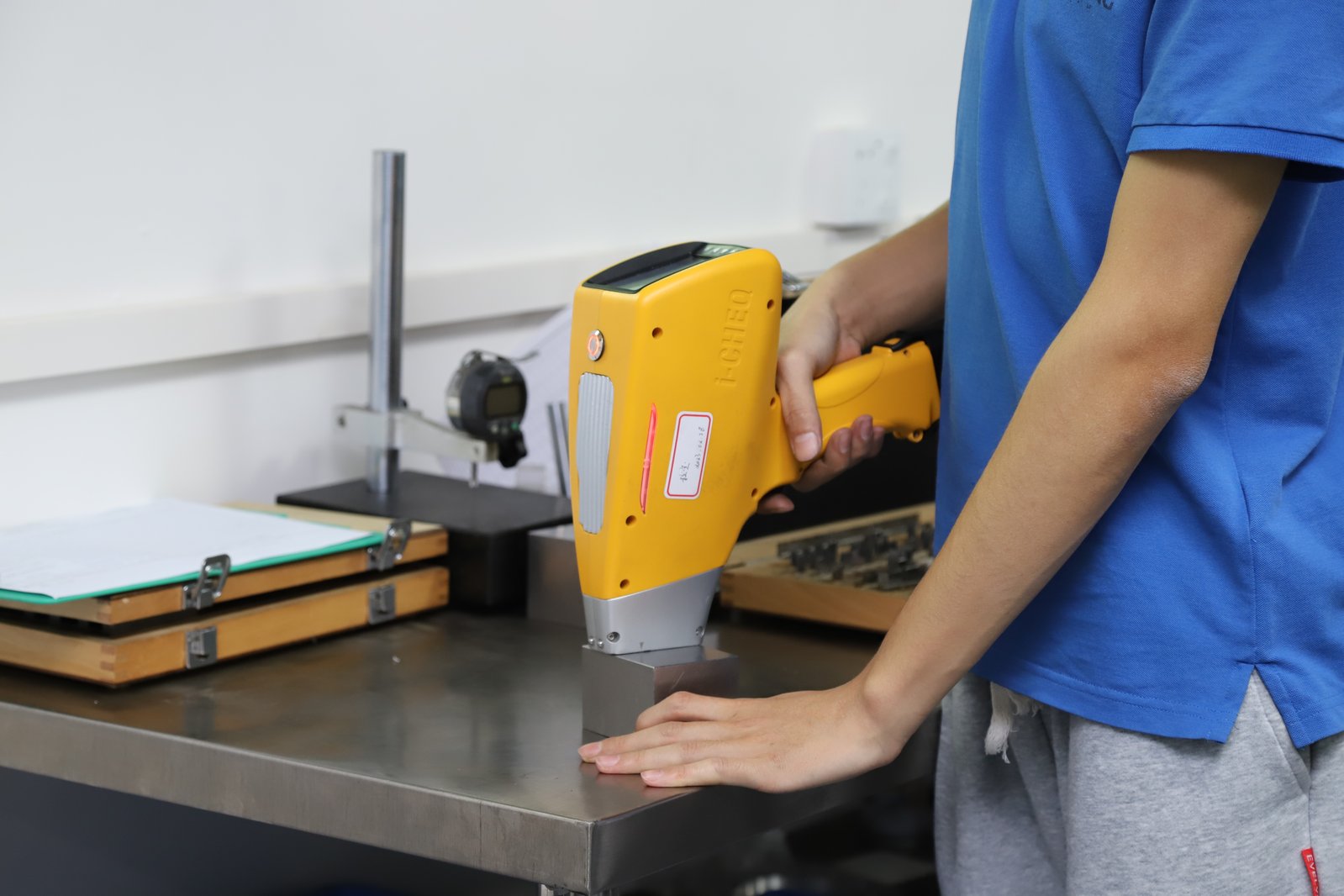
Where should the CNC side of a hybrid route sit? On this site, machining since 2005 is the core business of Dongguan Zhuohang Ltd, registered as 91441900MA4UWT6X39, running a 6,800 m² plant with 100+ machines and 100+ people at No. 8, Shuibian Songyuan Road, Hengli Town, Dongguan, Guangdong, China 523470, under ISO 9001:2015 (116024/A/0001/UK/En), IATF 16949:2016 (product design excluded) (131941/A/0001/SM/En), and ISO 14001:2015 (116024/B/0001/UK/En). The floor holds ±0.003 mm on milled and turned features and reaches ±0.002 mm on precision-ground surfaces, with key characteristics charted to Ppk ≥ 1.67 initial — the SPC record on a representative length characteristic shows Cpk 1.851 — and every incoming blank is verified against its certificate before it is machined. A blank arriving at that door is inspected for material identity and condition first, because a record chain built on an unverified blank records the wrong starting point.
Read the tolerance band before you read the index. Cpk is a ratio of the tolerance band to the process spread, not an absolute measure of accuracy. The figure above was recorded on a length characteristic with a 0.4 mm band (76.1–76.5 mm) — wide by design. Hold the same process spread against a ±0.005 mm feature and it fails outright. Ask for the band, the subgroup count and the sampling window on every capability number a supplier quotes.
Two details decide whether the splice holds in practice. First, who owns the blank's incoming inspection? If the machining floor records the blank heat at receiving and re-states it on the traveler, the seam is welded; if the blank sits in stores until it is needed and the identity is noted only at issue, the seam is a loose handshake. Second, what happens to the chain when the post-process step is outsourced? The forge or foundry heat record, the machining lot record, and the heat-treatment or plating batch number must all resolve to one part identity. Ask each supplier to show you the join on a real past order — the document where the blank number and the machined-lot number appear together — before you commit a hybrid program to them.
What is the third question after quantity and geometry, and when does it overrule both?
The quantity and geometry questions that drive most process comparisons — whether the volume crosses a tooling crossover, whether the shape fits a die or a mold — decide which process can make the part cheaply. They do not decide which processes are admissible. Admissibility is set by a third question that most process-selection guides never reach, and it overrules both of the first two whenever the answer is yes.
Run the part through three questions in order:
- Would this part's failure hurt someone, stop production, or force a recall? A brake component, a seal carrier, a pump shaft, an implantable-device interface — anything whose failure reaches a person, a production line, or a customer's warranty department.
- Must I submit PPAP or first-article records to my customer? If your customer audits your supply chain, the record requirement is already contractual, whether or not the part is dangerous.
- Can I accept a batch that cannot trace its heat? Not "do I expect a problem" — can your system survive being unable to answer "which heat was this?" when asked.
If all three answers are no — the part is cosmetic or low-stress, no customer record requirement exists, and an untraceable batch would cause no pain — then cost and geometry decide freely, and the cheapest route that makes the shape is the right answer. If any answer is yes, the traceability chain outranks price, and the process comparison that follows runs only inside the routes whose record depth matches the consequence. A part whose failure could reach a person but whose volume strongly favors a casting is not therefore cast; it is cast only if the foundry's records survive to part level, and otherwise the machining route wins regardless of the unit-price gap. The three questions convert "traceability matters" from a sentiment into a decision, and they are the gate this site's quality assurance pages make auditable on the machining side — records that ship with the parts and can be held to account.
Notice how this differs from the two-question volume-and-geometry screen used elsewhere. That screen answers "which process is cheapest for this shape at this quantity?" and it assumes every candidate is admissible. The traceability screen runs first and answers "which candidates can even be audited?" A buyer who skips it and orders a high-volume part from the cheapest route has not made a bad decision — they have made a decision whose consequences were deferred to the first field failure, where the record they did not buy will be the only evidence available.
What should the RFQ say so the record chain comes back with the parts?
A process RFQ that asks for price and lead time returns a price and a lead time; the records arrive only if the RFQ names them. Writing the record requirement into the RFQ is what turns an alternative-process quote into something a quality system can actually use, and the lines below work for every route in the matrix.
- Name the material–process pair as a pair. "Die-cast A380 body, then machine the datum faces and seal bores" is an instruction; "aluminum casting" is a guess. The pair names which record belongs to which half.
- Name the record set you will accept. For the machining half: material certificate with the lot number, XRF or equivalent verification at receiving, first-article report, CMM data on the critical features, SPC where a characteristic is charted. For the alternative half: heat or melt number, furnace-load records, and the inspection reports that route actually produces, not a generic promise of "full documentation."
- State the lot-identity rule. How will the supplier keep one batch from mixing with another, and what survives to the box on your dock — a stamp, a tag, a traveler, a per-piece code? For regulated work, name the granularity: per-piece, per-lot, or per-load, and say which one the certificate must match.
- Name the post-process step and its record. Heat treatment, plating, anodizing, passivation — each must return a batch number that links back to the part identity, and the RFQ should say that a certificate without a link is not accepted.
- Ask for the seam on hybrid work. If a blank feeds the machining floor, require the document that carries both numbers, as described in the previous section, and make the first article the moment the seam is demonstrated.
- Mark the tolerance features and their verification. A drawing full of ±0.003 mm callouts on the machining half means CMM verification on those features; write it down, and the quote prices the measurement rather than just the cutting.
A first article is the moment the whole record chain is defined, and it is worth more than any later audit. What is not recorded on the first article is expensive to invent at volume, and a supplier who can show a first-article package with every link named has already demonstrated the chain; a supplier who says the records "can be provided" has not. On a hybrid program, the first article should cover the blank, the machined features, and the join — three records on one part — because that is the exact set an auditor will ask for when the program is a year old.
When is a cheap route with a thin record the rational choice anyway?
Nothing in this guide argues that every part should be CNC machined, and the matrix is not a ranking of processes. It is a map of record capability, and record capability is only worth paying for where the failure consequence justifies it. A decorative bracket, a low-stress cover, a cosmetic trim piece, or a part whose only requirement is that it look right and hold a shape — for those, the cheapest route that meets the drawing is the rational choice, and demanding a PPAP package for them is waste. Traceability spending should track failure consequence, not fashion: regulated, load-bearing, or human-contact parts earn a deep record chain; unregulated, low-risk parts earn the cheapest process that makes them.
The boundary case deserves equal honesty. CNC machining is not automatically traceable, and a buyer who assumes it is will be disappointed by the same outsourced-step gap that weakens other routes. If a machining shop sends heat treatment or anodizing to an outside vendor and never collects the vendor's batch numbers, its chain has a hole exactly where a foundry's does — the only difference is that the machining floor's hole is easier to close, because the incoming material identity is already recorded and the missing link is one vendor document. Ask the shop to show the whole chain on a shipped order, not just the cutting part of it. The supplier screen guide on this site is built around exactly that request: sample records that prove each link before the order, not promises that the records exist.
That is the honest position this guide ends on. Grade the part by what its failure would cost; let that grade set the traceability requirement; and let the traceability requirement eliminate process candidates before price is ever discussed. For parts that clear the bar, the machining route usually wins because its record is a by-product of the process. For parts that do not clear it, choose the cheapest route that makes the shape and spend the saved money somewhere the risk is real.
Frequently Asked Questions
Is 3D-printed traceability really worse than CNC traceability?
Not across the board. Powder-bed fusion logs its builds in fine detail — layer parameters, machine, and operator are part of the build file, which is often better than what a conventional shop records for a milling pass. The gap sits in the feedstock. CNC starts from certified bar or billet, and the lot number on the part leads straight to a mill certificate. Printed parts start from powder that is sieved, reused, and blended across builds, so the powder actually melted in a layer is not cleanly tied to one certificate. Build-level traceability is strong; powder-level traceability is the emerging problem, and it matters most when a failure could be feedstock-driven rather than layer-driven.
A foundry says "every melt has a report" — is that enough?
It is a start and not a finish. A melt or heat report covers every part poured from that heat, which is a wide group, and it does not by itself tell you the shell batch, the heat-treatment load, or which parts inside the group were the ones that failed. Ask three follow-ups: does the report tie this specific part to its pour and shell batch, is the heat-treatment load on the same document, and does the identity survive to the box on your dock? A foundry that answers all three with a document has a chain; a foundry that answers with a policy does not.
Why is MIM traceability genuinely hard?
Because the process mixes batches at its most important step. Parts are molded in batches, and the debinding and sintering that follow run in furnaces loaded with many parts at once, so a single sinter load can mix several molding lots. After sintering the parts may be indistinguishable, so a failed part resolves to the furnace load rather than the molding batch that actually produced it. Powder feedstock lots are certified and furnace cycles are logged, but the molding-batch identity — the grain at which a problem could be contained — is lost in the load. That is an inherent property of the process, not a documentation lapse a supplier can fix with better paperwork.
My part is not regulated — can I ignore traceability?
Regulation is a proxy for failure consequence, not the only source of it. An unregulated part that sits in a safety-relevant assembly, or that stops a customer's line when it fails, carries the same risk whether or not a regulation names it. The honest test is the three-question gate in this guide: would failure hurt someone or stop production, must you submit records to your customer, and could you survive an untraceable batch? If all three are no, traceability is genuinely optional and the cheapest route is rational. If any is yes, the record requirement exists whether a regulator wrote it down or not.
How much more can CNC cost before paying for traceability stops making sense?
There is no fixed premium, and anyone quoting one without your part is guessing. The decision framework is a comparison of expected costs. Estimate the cost of the worst credible failure — containment, rework, line stoppage, warranty, or recall — multiply it by a realistic probability that the failure happens and is traceable to your part, then compare that number with the price gap between the machining route and the cheaper alternative over your order quantity. If the expected failure cost exceeds the gap, the record is the cheaper purchase. Most buyers under-estimate the containment cost of a batch-sized answer to a part-sized failure, which is why the calculation belongs on paper before the process choice, not in the recall meeting.
Does choosing CNC automatically mean full traceability?
No. CNC produces the raw material for a record chain as a by-product, but the chain is only as complete as the shop's discipline. The classic hole is the outsourced step: heat treatment, plating, or anodizing sent to a vendor whose batch number never returns to the shop's record. A shop that logs material, program, machine, and inspection in-house but drops the vendor link has a break in the same place a foundry does. Ask to see the full chain on a shipped order — including the outside-process document — before assuming that "CNC" and "traceable" are the same word.
Do prototypes and first articles need the same record depth as production?
The first article is exactly where the record chain should be defined, because it is the moment every link is demonstrated on a real part — material identity, process, measurement, and on hybrid work the blank-to-machined seam. Production then repeats the demonstrated chain. Prototypes that never reach production need only proportional records. The mistake is treating the first article as a dimensional check only; it is the template for every record the program will ship, and a first-article package with named links is the cheapest audit you will ever run on a supplier.
Choosing between machining and an alternative process, and not sure which one keeps your traceability chain intact?
Send the drawing with your failure-consequence class and record requirements; you will get a process recommendation with the record chain spelled out. Email [email protected] or call +86 13126536955.